
Respectful Behavior and Communication
In Thai culture, respect is key. The ‘wai’ greeting, pressing your palms together at chest level and bowing slightly, shows deference, especially to elders or those with higher social status.
Staying calm is crucial. Avoid displaying strong emotions in public to prevent “losing face.” A friendly smile can smooth over most social hiccups.
Address elders with “Khun” before their name to show respect. Keep your feet on the ground, not pointed at people or sacred objects. Show extra reverence to Thai monks, and if you’re female, avoid touching them.
- Use your right hand when passing objects or paying
- Avoid pointing with your finger; use your whole hand instead
- Never touch someone’s head, even playfully
Patience and politeness are highly valued. Handle disagreements tactfully and always be ready with a smile. Remember: in Thailand, a smile goes a long way!

Appropriate Dress and Social Norms
Dressing modestly is important in Thailand. Often, you’ll need to remove your shoes when entering homes, temples, or some shops. Look for cues like a pile of shoes at the entrance.
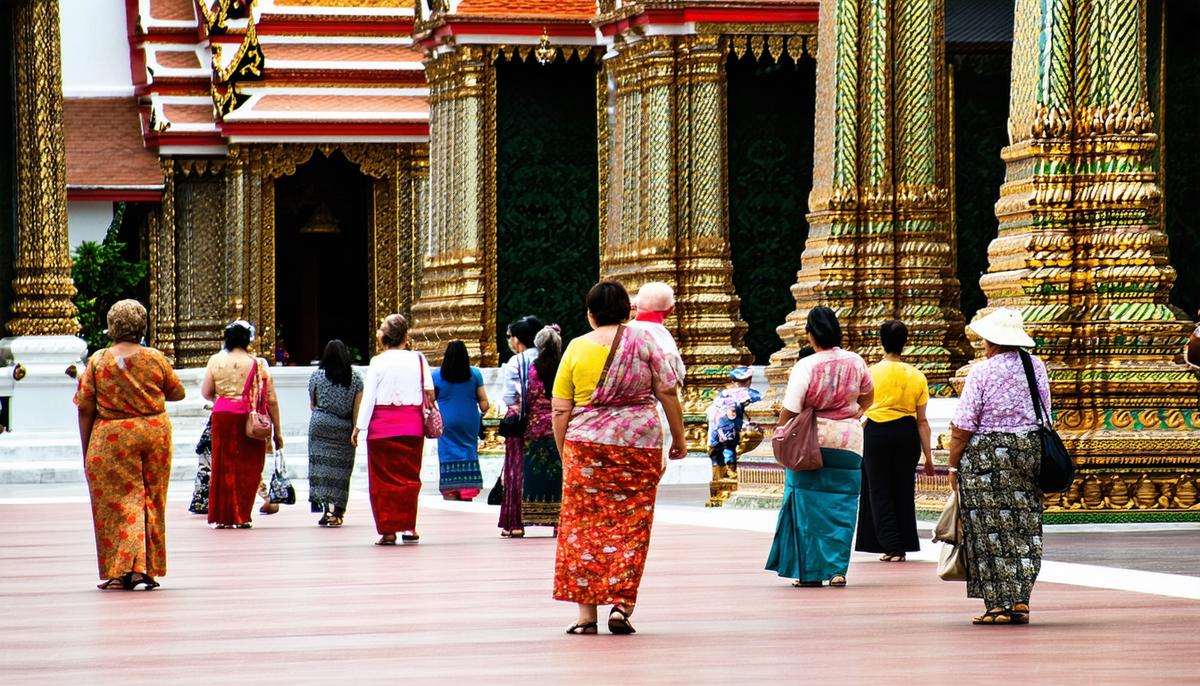
For temple visits, wear long skirts or trousers and tops that cover your shoulders. This shows respect for these sacred spaces.
"While Thailand is famous for its beaches, modest clothing is expected when visiting temples or sacred sites. Cover your shoulders and knees to show respect."
Choose lightweight, comfortable fabrics that suit the humid climate without sacrificing decency. A shawl or scarf can be handy for impromptu temple visits.
Even in urban areas, modesty matters. Keep swimwear to beaches and pools, and opt for respectful attire when exploring markets or landmarks.
By following local dress codes, you’re showing appreciation for the culture, making your journey more enriching.
Understanding Local Customs and Etiquette
In Thailand, feet are considered the lowest part of the body. Avoid putting them on tables, pointing them at someone, or at Buddha statues. When sitting in temples or polite settings, tuck your feet beneath you.
The head is sacred, so don’t touch someone’s head or hair casually, even a child’s.
Instead of pointing with your finger, use your entire hand to gesture or your chin to indicate direction.
When taking photos, be mindful of sacred spaces and people who might not want to be photographed. Treat Buddha statues with respect, and avoid taking selfies with your back turned to them.
Public displays of affection are inappropriate. Maintain a calm, courteous demeanor, especially when interacting with anything related to the Royal Family.
By following these customs, you’ll show respect and blend in more easily. You’ll become a true ambassador of understanding, ready to make meaningful connections beyond your itinerary.
As you explore Thailand, let respect and understanding guide you. By embracing local customs, you’ll transform from a visitor into a welcomed guest, enriching your travels and deepening the connections you make along the way.
- Bouchier-Hobin B. Cultural etiquette in Thailand. Destination2.
- Scott C. Thai etiquette tips. Cinders Travel.
- Kotwal S. Respecting Thai customs. Away Holidays.
- Warren E. Family travel in Thailand. Family Cruise Companion.